Choosing custom cabinets is not only a layout decision. The color, wood species, door style, finish, construction material and hardware all shape how the room feels every day. Two kitchens can have the same footprint and still look completely different because one uses warm white shaker cabinets while the other uses walnut slab doors, matte black hardware and a stone backsplash. For Atlanta homeowners planning a kitchen remodel, bathroom vanity, pantry wall, laundry room or built-in storage project, cabinet selections deserve careful attention before anything is ordered.
The challenge is that cabinet choices are connected. A paint color can look beautiful on a small sample and feel too cool under the actual kitchen lighting. A wood species can look refined in a showroom and too busy next to a bold floor. A door style can feel timeless in one home and too plain in another. A finish can look luxurious but require more realistic expectations around wear, cleaning and long-term maintenance. Custom cabinetry gives homeowners more control, but that control works best when each decision is made with the whole room in mind.
This guide explains how to choose custom cabinet colors and materials in Atlanta homes. It covers painted finishes, stained wood, walnut, white oak, maple, MDF, plywood box construction, shaker doors, inset cabinets, frameless European cabinets, slab doors, matte and satin finishes, two-tone kitchens, open-concept layouts and the questions homeowners should ask before finalizing a cabinet package.

Why Cabinet Color and Material Selection Matters
Cabinets are one of the largest visual surfaces in a kitchen or built-in storage area. They often cover more visible square footage than countertops, backsplash or flooring. That means the cabinet color and material will strongly influence whether the room feels bright, warm, modern, traditional, dramatic, calm or high end. In an open-concept Atlanta home, cabinetry may be visible from the living room, dining area and entry path, so the selection affects more than one room.
Material selection matters just as much as color. A painted cabinet door made from the right substrate can look smooth and refined. A stained walnut door can bring depth and warmth that paint cannot copy. A white oak cabinet can feel natural and architectural. A frameless slab door can create a clean European look. An inset painted cabinet can feel like fine furniture. These choices change both the design language and the way the cabinets age.
Custom cabinets also represent a significant investment. Homeowners should not choose finishes based only on what looks good in a photo. The right choice should fit the home’s architecture, the amount of natural light, the countertop and backsplash direction, the family’s maintenance expectations and the long-term value of the remodel. A beautiful cabinet package is one that still feels appropriate several years later.
Custom Cabinet Selection at a Glance
| Decision | What it affects | Common options |
|---|---|---|
| Cabinet color | Overall mood, brightness and resale appeal | Warm white, greige, navy, green, black, natural wood |
| Wood species | Grain, warmth, texture and luxury feel | Walnut, white oak, maple, cherry, hickory |
| Door style | Design character and architectural fit | Shaker, slim shaker, inset, slab, raised panel |
| Cabinet construction | Durability, storage performance and cost | Plywood boxes, MDF painted doors, hardwood frames |
| Finish sheen | Light reflection, cleaning and visual softness | Matte, satin, semi-gloss, stained, glazed |
| Hardware | Style, scale and daily comfort | Knobs, pulls, appliance pulls, mixed metals |
Start With the Home, Not the Color Sample
Many homeowners begin by saving cabinet color photos. That is useful, but the better first question is: what does the home need? A traditional Atlanta home may respond well to inset cabinetry, warm white paint and classic hardware. A newer Alpharetta or Milton home may support white oak, slab doors or a two-tone cabinet plan. A Buckhead remodel may call for walnut, deep green, navy or furniture-style cabinetry. A Roswell family kitchen may need durable painted cabinets with practical storage and a timeless finish.
The home’s architecture should guide the cabinet language. A cabinet style that looks perfect in a modern home may feel disconnected in a more traditional property. The opposite is also true: ornate details can feel heavy in a clean contemporary kitchen. Custom cabinets should support the architecture instead of fighting it.
Lighting is another major factor. Atlanta homes with large windows and bright natural light can handle deeper cabinet colors more easily. Homes with limited light may need warmer whites, lighter wood tones or better lighting design to avoid feeling dark. A north-facing kitchen can make some whites look gray or blue. A kitchen with warm floors can make certain cool colors feel out of place. Samples should be reviewed in the actual room whenever possible.
Warm White Cabinets
Warm white remains one of the most practical cabinet choices for Atlanta kitchens because it works with many home styles. It feels bright without being harsh, and it can pair well with quartz, marble-look counters, wood floors, brass hardware, nickel hardware and a wide range of backsplash materials. Warm white is especially useful when the homeowner wants a timeless kitchen that will not feel dated quickly.
The important word is warm. A white that looks clean in the showroom can look cold at home if the undertone is too blue or gray. Warm white has a softer quality. It can feel classic, transitional or luxury depending on the door style and hardware. A shaker door in warm white may feel relaxed and timeless. An inset door in warm white may feel more formal. A slab door in warm white may feel modern and minimal.
Warm white cabinets are also flexible for resale. They allow the homeowner to bring personality through lighting, hardware, backsplash and island color. The risk is that a plain white kitchen can feel flat if all the surrounding materials are also plain. Texture, hardware scale, countertop movement and lighting help keep warm white cabinetry from feeling generic.
Greige, Taupe and Soft Neutral Cabinets
Greige and taupe cabinet colors are popular because they sit between white, gray and beige. They can feel warmer than gray but more grounded than white. For Atlanta homeowners who want a neutral kitchen with a designer look, these colors can be a strong option. They work especially well in transitional homes with warm wood floors, natural stone, quartz countertops and mixed metal hardware.
The main advantage of greige is depth. It can give the room more character without becoming too bold. A soft taupe perimeter with a wood island can feel layered and high end. A greige vanity can make a bathroom feel calmer than stark white. A pantry or laundry room in a warm neutral can feel finished without demanding attention.
Undertones matter. Some greige colors lean pink, some lean green, some lean gray and some lean beige. The wrong undertone can clash with flooring or countertops. Samples should be compared against the actual surfaces in the room. A color that looks beautiful beside a white quartz sample may shift when placed beside warm oak floors or a creamy backsplash tile.
Navy, Green and Deep Accent Cabinet Colors
Navy and deep green cabinet colors can create a rich, custom look. They are often used on islands, bars, built-ins, bathroom vanities or butler pantries, but they can also work for full kitchens when the room has enough light and the surrounding materials are balanced. These colors feel more intentional than standard neutrals and can make cabinetry a focal point.
Navy cabinets pair well with warm brass, polished nickel, white counters, wood accents and classic tile. Deep green cabinets can feel organic, traditional or dramatic depending on the shade. A muted green may feel calm and natural. A darker green may feel luxurious and moody. Both colors require careful coordination because they have strong undertones.
Accent colors are powerful, so they should be placed strategically. A bold island can give the kitchen personality while keeping the perimeter more timeless. A navy bar cabinet can define an entertaining zone. A green vanity can make a powder room memorable. If every cabinet in the room uses a strong color, the countertop, backsplash and hardware should be edited so the design does not become too busy.
Black and Charcoal Cabinets
Black and charcoal cabinets can look very high end when used with discipline. They create contrast, frame architectural lines and pair well with natural wood, stone, brass and modern lighting. In an Atlanta home with strong natural light, black cabinetry can feel dramatic and refined. In a darker room, it can feel heavy if lighting and surrounding finishes are not planned carefully.
Black cabinets show dust, fingerprints and surface marks differently than lighter finishes. This does not mean they should be avoided, but homeowners should understand the maintenance reality. Matte black can look beautiful but may show oils from hands. A satin finish may be more forgiving. Hardware placement can also reduce direct contact with doors and drawers.
Charcoal is often easier to live with than pure black. It gives depth without becoming as stark. It can work on an island, pantry wall, bar area or bathroom vanity. In a luxury kitchen, charcoal cabinets may pair beautifully with white oak, walnut, marble-look quartz or a simple backsplash.
Natural Wood Cabinets
Natural wood cabinets bring warmth, movement and texture into a room. Unlike paint, wood has grain variation. That variation can make a kitchen feel custom and organic, but it also means the homeowner must be comfortable with natural differences from door to door. Wood cabinetry is not flat color. It has personality.
Wood cabinets are especially useful in open-concept homes because they help connect the kitchen to furniture, floors and living spaces. A wood island can soften a white kitchen. A walnut pantry wall can feel architectural. White oak slab doors can create a clean modern look. Wood vanities can make bathrooms feel warmer and less sterile.
The key is balance. Too much wood in the same tone can feel heavy if the floors, cabinets and furniture all compete. A wood cabinet finish should be compared against flooring, beams, furniture and countertop samples. Sometimes contrast is better than a near match. A white oak cabinet next to a slightly different oak floor can look accidental if the undertones are too close but not close enough.
Walnut Cabinets
Walnut is one of the most recognizable luxury cabinet materials. It has rich brown tones, natural depth and a grain pattern that can feel refined without being overly rustic. Walnut works beautifully in high-end kitchens, bars, vanities, built-ins and pantry walls. It can support modern, transitional and sophisticated traditional interiors depending on the door style.
With slab doors, walnut can look clean and architectural. With inset or framed doors, it can feel more furniture-like. Walnut pairs well with white counters, dark counters, stone backsplashes, brass hardware, black hardware and integrated appliances. It is also effective as an accent when the homeowner does not want a full wood kitchen. A walnut island or tall cabinet wall can add warmth to painted perimeter cabinets.
Because walnut has natural color variation, homeowners should review larger samples when possible. Small samples may not show the full range of grain and tone. Walnut can also darken or mellow over time depending on light exposure and finish. That natural aging is part of its appeal, but it should be expected.

White Oak Cabinets
White oak has become a favorite for homeowners who want natural warmth with a lighter, cleaner look. It can feel modern, Scandinavian, organic, transitional or luxury depending on finish and door style. White oak works well in Atlanta homes where the goal is to make the kitchen feel warm but not dark.
Rift-cut white oak is especially popular in modern cabinet design because the grain is more linear and calm. It works well with slab doors and frameless construction. Plain-sawn white oak has more visible movement and can feel more traditional or rustic. Both can be beautiful, but they create different moods.
White oak undertones should be managed carefully. Some finishes lean yellow, some lean gray and some lean natural. A finish that looks warm and elegant in one room can look too yellow beside a cool countertop. A gray-washed oak can look trendy in a photo but may not feel timeless in every home. The best white oak cabinet finish should coordinate with floors, counters and lighting.
Maple, Painted Doors and MDF
Maple is commonly used for cabinetry because it has a smooth grain and accepts paint well. It can also be stained, though some homeowners prefer stronger-grain woods when they want a visible natural wood look. For painted cabinets, smoothness and stability are important. A door that is too grainy may show texture through the paint.
MDF is often used for painted cabinet doors because it can provide a very smooth painted surface and reduce some of the movement that solid wood experiences. This surprises some homeowners who assume MDF is always inferior. In the right application, especially for painted panels, high-quality MDF can be practical. The key is understanding where it is being used and how the cabinet system is constructed.
Plywood is often preferred for cabinet boxes because it is strong and durable. Particleboard, MDF and plywood all exist in different grades, so the label alone does not tell the whole story. Homeowners should ask about box construction, shelf support, drawer boxes, hinges, slides and finish process. The materials behind the doors affect how the cabinets feel after years of daily use.
Painted Cabinets vs. Stained Cabinets
Painted cabinets give homeowners more color control. They can be white, warm neutral, navy, green, charcoal or almost any custom shade. Painted cabinets can feel clean and tailored, especially in transitional and traditional kitchens. They are also easier to coordinate with a wide range of countertops and backsplashes.
Stained cabinets highlight the natural character of wood. They bring warmth and depth that paint cannot fully replicate. Stain can make walnut, white oak, maple or other wood species feel richer and more dimensional. Stained cabinets work well when the homeowner wants texture and natural material to be part of the design.
The decision often comes down to personality and maintenance expectations. Painted cabinets may show chips differently than stained wood. Stained wood may show natural variation that some homeowners love and others find inconsistent. A blended kitchen can use both: painted perimeter cabinets with a stained wood island, or a wood pantry wall with painted lower cabinets.
Shaker Cabinet Doors
Shaker cabinet doors are popular because they are simple, versatile and familiar. They can work in traditional, transitional, farmhouse and modern homes depending on proportion and finish. A standard shaker door in warm white can feel classic. A slim shaker door in a soft neutral can feel more contemporary. A deep green shaker vanity can feel tailored and memorable.
The size of the rail and stile matters. A wide-frame shaker door can feel more traditional. A narrow-frame shaker door can feel cleaner and more modern. The edge profile also affects the look. Small details change whether the door feels casual, refined or architectural.
Shaker doors are a strong choice for homeowners who want a cabinet style that is unlikely to feel overly trendy. However, they still need the right finish, hardware and surrounding materials. A plain shaker door with plain hardware and a plain countertop can feel underdesigned. Layering texture through backsplash, lighting, hardware and countertop movement can elevate it.
Inset Cabinets
Inset cabinets are often associated with high-end cabinetry because the doors and drawers sit inside the cabinet frame. This creates precise reveal lines and a furniture-like appearance. Inset cabinets can look beautiful in traditional, transitional and luxury kitchens, especially when paired with warm white paint, walnut, polished nickel, brass or carefully selected hardware.
Inset cabinetry requires careful planning and installation. The spacing around each door and drawer matters. Seasonal movement, hinge selection, hardware placement and alignment should be discussed with the cabinet team. The result can be very refined, but it is not the same as choosing a simple stock cabinet door.
For Atlanta homeowners who want a classic custom look, inset cabinets are worth considering. They can elevate a kitchen, bathroom vanity, pantry, bar or built-in storage area. Homeowners comparing inset with other cabinet styles can read Trendy Cabinets’ guide to Inset vs. Frameless vs. Shaker Cabinets in Atlanta.
Frameless European Cabinets
Frameless European cabinets are often chosen for clean lines, efficient storage access and a modern look. Without a traditional face frame, the cabinet opening can feel more accessible. Frameless construction works especially well with slab doors, slim shaker doors, matte finishes, white oak, walnut and integrated appliances.
This style can be excellent in modern Atlanta homes, high-rise condos, contemporary remodels and open-concept kitchens. It can also make smaller kitchens feel more efficient because the interior access is straightforward. The design language is usually cleaner and less decorative than inset cabinetry.
Frameless cabinets need strong installation and precise planning. Door alignment, panel sizing, appliance coordination and hardware placement are important. If the homeowner wants a seamless look with panel-ready appliances, the cabinet and appliance specifications should be coordinated early. Related planning is covered in Trendy Cabinets’ article on panel-ready appliance cabinets in Atlanta.
Slab Doors and Modern Cabinet Design
Slab cabinet doors are flat, clean and minimal. They work well when the homeowner wants the material itself to be the focus. A walnut slab door shows wood grain. A white oak slab door feels warm and modern. A matte painted slab door can create a calm, contemporary kitchen. Because slab doors do not have frames or panels, the finish and hardware become more noticeable.
Slab doors can look very high end when the proportions are right. Large panels should be carefully planned so the kitchen does not feel too plain or too heavy. Hardware can be minimal, integrated or used as a design accent. In some modern kitchens, touch-latch or recessed pulls create an even cleaner look, though these choices should be evaluated for daily practicality.
The risk with slab doors is flatness. If every surface is plain, the room may need texture from wood grain, stone, tile, lighting or architectural details. A slab cabinet design should be edited but not empty. The best modern kitchens feel calm because the details are controlled, not because the details are missing.
Raised Panel and Traditional Cabinet Doors
Raised panel cabinet doors can work well in traditional homes, but they should be used thoughtfully. In some spaces, raised panels feel elegant and appropriate. In others, they can make the kitchen feel heavier or more dated. The difference often depends on proportion, finish color, hardware and surrounding design choices.
A raised panel vanity or built-in may feel right in a classic Atlanta home with traditional moldings and formal architecture. A large kitchen with heavy raised panel doors, dark stain and ornate trim may feel less current if the homeowner wants a fresh remodel. The goal is not to avoid traditional detail, but to use it in a way that fits the home and the desired level of refinement.
For many transitional remodels, homeowners choose a simpler framed door instead of a heavily detailed raised panel. This keeps the cabinet style classic without feeling overly formal. A showroom visit can help homeowners compare the difference in person.
Matte, Satin and Gloss Cabinet Finishes
Finish sheen affects how cabinets reflect light and how they feel to the eye. Matte finishes are soft and understated. They can make painted cabinets, dark colors and modern slab doors feel refined. Satin finishes offer a slight glow and are often practical for kitchens because they are not too flat and not too shiny. Gloss finishes can feel modern but may show fingerprints and surface imperfections more easily.
For most Atlanta kitchen remodels, matte or satin finishes are more common than high gloss. They work well with natural stone, quartz, wood floors and warm lighting. A matte finish can reduce glare in bright open spaces. A satin finish can add a bit of life to painted cabinetry without looking overly reflective.
Cleaning expectations should be discussed. Some ultra-matte finishes can show oils from hands. Some glossy finishes show smudges. Dark colors can show dust. Light colors can show stains near cooking zones. There is no finish that eliminates maintenance completely, but there are better choices for each household’s habits.
Two-Tone Cabinet Color Plans
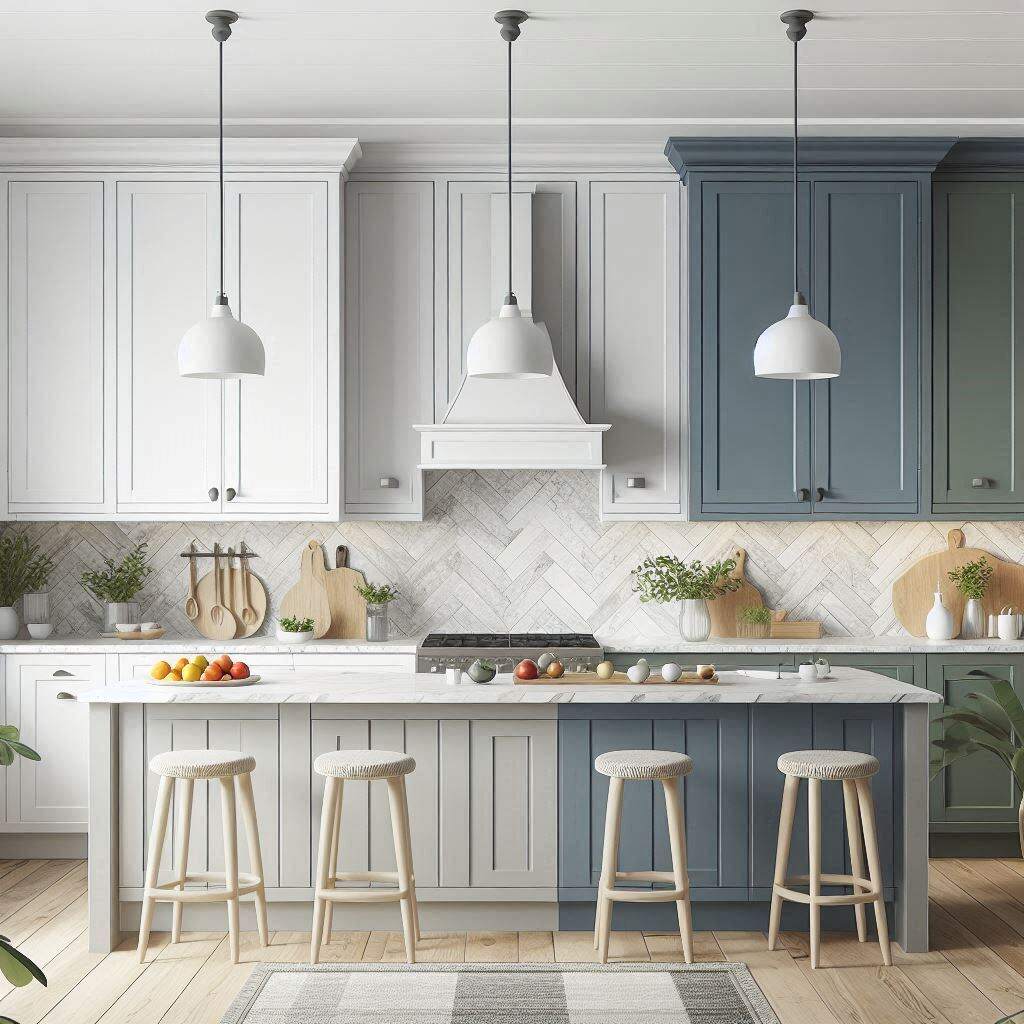
Two-tone cabinet designs are popular because they add depth without making the entire kitchen bold. A common approach is a warm white perimeter with a wood island. Another is a soft neutral perimeter with a navy or green island. Some kitchens use a darker pantry wall, a wood appliance wall or contrasting base cabinets.
The best two-tone kitchens have a clear reason for the contrast. The island may become the focal point. The tall wall may feel like furniture. The pantry may connect to the home’s built-ins. The contrast should support the layout rather than looking random. If the kitchen already has dramatic stone, bold lighting or patterned tile, the cabinet colors may need to stay calmer.
Two-tone planning also requires undertone control. A warm white perimeter and a cool gray island may not relate well. A wood island and wood floor may need enough contrast to avoid looking mismatched. Samples should be viewed together with countertop, backsplash, flooring and hardware.
Matching Cabinets With Countertops and Backsplash
Cabinet selections should never be made in isolation from countertops and backsplash. These three surfaces define the kitchen. If all three are busy, the room can feel chaotic. If all three are plain, the room can feel flat. A strong design usually gives one surface more visual leadership while the others support it.
If the cabinets are dramatic, the countertop and backsplash may need to be quieter. If the countertop has bold veining, the cabinets may need a simpler finish. If the backsplash has texture or pattern, cabinet color should be edited carefully. Hardware and lighting should connect the surfaces rather than introducing another unrelated idea.
Homeowners planning surface coordination can review Trendy Cabinets’ guides to kitchen backsplash ideas in Atlanta and quartz vs. granite countertops in Atlanta kitchens. These decisions become easier when samples are compared together instead of one at a time.
Cabinet Colors for Open-Concept Kitchens
Open-concept kitchens need special attention because the cabinets are part of a larger living space. A color that looks attractive from inside the kitchen also needs to work from the sofa, dining table and entry view. Cabinet backs, island panels, appliance walls and tall storage may all be visible from multiple angles.
In open spaces, natural wood can help the kitchen feel connected to furniture and flooring. Warm white can keep the room bright. A dark island can create a visual anchor. A full dark kitchen may be beautiful if the room has enough light, but it should be balanced with floors, counters and nearby furnishings.
Open kitchens also benefit from clutter-control cabinetry. Appliance garages, pantry walls, pull-out storage and panel-ready appliances can keep the visible room calm. For more planning, see Trendy Cabinets’ guide to custom kitchen cabinets for open-concept homes in Atlanta.
Cabinet Material Choices for Bathrooms, Pantries and Built-Ins
Cabinet colors and materials should also be considered beyond the kitchen. Bathroom vanities, pantry walls, laundry rooms, mudrooms, bars and living room built-ins can all use custom cabinetry. These spaces do not always need to match the kitchen exactly, but they should feel related to the home’s overall design.
A bathroom vanity can handle a richer color because it is often a smaller surface area. A powder room vanity in navy, green, walnut or white oak can create a memorable design moment. A laundry room may use a practical painted finish that feels clean and durable. A pantry wall may repeat the kitchen island color. A mudroom may need a deeper, more forgiving finish because it handles shoes, bags and daily traffic.
Material selection should match the space’s demands. Bathrooms need finishes that can handle moisture and daily cleaning. Mudrooms need durability. Pantries need strong shelves and usable interiors. Built-ins need proportions that relate to the room’s architecture. For storage-focused inspiration, see Trendy Cabinets’ articles on walk-in pantry cabinets in Atlanta and custom mudroom cabinets in Atlanta.
Durability and Daily Use
A cabinet finish should be beautiful, but it also needs to survive real life. Families cook, clean, open drawers, carry groceries, spill coffee and touch cabinet doors every day. A finish that looks perfect in photos may not be the right choice if it does not match the household’s habits.
High-traffic kitchens may benefit from durable painted finishes, practical hardware, strong drawer slides and thoughtful storage accessories. Dark matte doors may be gorgeous, but they can show fingerprints if used in a busy family kitchen. Very light cabinets may show stains near trash pull-outs or cooking zones. Wood can hide some marks better than paint, but it has natural variation that should be accepted.
Durability is also about construction. Strong boxes, quality hinges, smooth drawer slides, stable shelves and proper installation affect daily satisfaction. Homeowners should ask what is behind the door, not only what the door looks like.
How Hardware Changes the Cabinet Finish
Hardware is small compared with cabinets, but it has a major effect on the final look. Brass hardware can warm up white, green, navy or walnut cabinets. Polished nickel can feel classic and refined. Matte black can add contrast and modernity. Stainless or brushed nickel can feel clean and practical.
Scale matters. Large drawers often need longer pulls. Tall pantry doors may need substantial handles. Panel-ready appliances need appliance pulls that are comfortable and strong. A small knob on a large drawer can look undersized and feel awkward. Hardware should be chosen by both appearance and daily use.
Hardware placement also matters. On shaker doors, the placement should relate to the rail and stile. On slab doors, placement can define the rhythm of the design. On inset cabinets, hardware should respect the reveal lines. A cabinet team can help homeowners test scale before final drilling.
Cabinet Finish Mistakes to Avoid
One common mistake is choosing a cabinet color from a phone photo. Screens distort color. Lighting changes everything. A color that looks warm online may look gray in the home. A wood tone that looks natural in a photo may look orange beside the actual floor. Samples are essential.
Another mistake is matching wood tones too closely without matching them exactly. A white oak cabinet beside a slightly different white oak floor can look like a mistake if the undertones conflict. It is often better to create clear contrast than to almost match.
A third mistake is choosing every trendy feature at once. A kitchen with dark cabinets, dramatic stone, bold backsplash, mixed metals, glass doors, open shelves and statement lighting may have too many focal points. Luxury design is usually edited. Decide what should lead and what should support.
Finally, homeowners should avoid choosing based only on resale. Resale matters, but the home also needs to fit the people living in it. A timeless custom cabinet plan can still have personality. The goal is a selection that feels appropriate, durable and personally satisfying.
Questions to Ask Before Finalizing Custom Cabinets
| Question | Why it matters |
|---|---|
| How much natural light does the room get? | Light changes how cabinet colors and wood tones appear. |
| What undertones are in the floors and countertops? | Cabinets should coordinate with fixed surfaces. |
| Will the kitchen be visible from other rooms? | Open-concept homes need broader design coordination. |
| How much maintenance is realistic? | Dark, matte, glossy and painted finishes age differently. |
| Which cabinet areas get the most traffic? | High-use zones may need more durable finishes and hardware. |
| What construction is included? | Boxes, drawers, hinges, slides and shelves affect long-term performance. |
How to Compare Cabinet Samples
Cabinet samples should be reviewed under several conditions. Look at them in the morning, afternoon and evening. Compare them under natural light and artificial light. Place them next to countertop, backsplash, flooring and hardware samples. If the kitchen is open to another room, view the samples from that room as well.
For wood cabinets, ask to see enough sample area to understand the grain. A small piece may not show natural variation. For painted cabinets, compare undertones against white paper, flooring and counters. For dark colors, check how fingerprints and dust may appear. For matte finishes, touch the sample and consider how it will clean.
It is also helpful to visit a showroom. Photos cannot fully communicate door weight, drawer movement, finish texture or hardware scale. Seeing cabinet displays in person can prevent costly surprises. Trendy Cabinets’ Roswell showroom gives Atlanta-area homeowners a place to compare styles, finishes and materials before committing.

Budget and Value Considerations
Cabinet color itself may not always change the cost dramatically, but material, construction, finish process, door style and accessories can. Walnut and rift-cut white oak may cost more than standard painted options. Inset cabinets often require more precision. Frameless systems, custom panels, premium hardware, roll-outs and specialty finishes can all affect the final number.
That does not mean every project needs the most expensive option. The best cabinet investment puts money where it improves the room most. A homeowner may choose a durable painted perimeter and invest in a walnut island. Another may keep the door style simple but upgrade storage accessories. Another may invest in panel-ready appliances because the kitchen is open to the living room.
When comparing quotes, make sure the scope is the same. Does the quote include installation, finished panels, trim, hardware drilling, drawer accessories, appliance panels and delivery? Are the boxes, doors and drawers built the same way? Are the finishes comparable? For broader budget planning, see Trendy Cabinets’ guide to custom cabinet costs in Atlanta.
Best Cabinet Choices by Design Goal
If the goal is timeless resale appeal, warm white shaker cabinets, soft neutral finishes, satin sheen and classic hardware are strong options. They work with many home styles and allow the homeowner to add personality through backsplash, lighting and island color.
If the goal is luxury warmth, walnut, white oak, inset doors, refined hardware and coordinated stone surfaces can create a high-end look. The design should be edited so the wood grain, countertop and hardware support one another.
If the goal is modern simplicity, frameless construction, slab doors, matte finishes and clean hardware may be best. White oak, walnut, warm white or charcoal can all work if the lines are controlled and the lighting is planned well.
If the goal is family durability, practical painted finishes, strong drawer construction, easy-clean surfaces, full-extension drawers and storage accessories may matter more than decorative detail. The cabinets should still look good, but they should make daily life easier.
Related Trendy Cabinets Guides
If you are choosing custom cabinet colors and materials in Atlanta, these related guides can help with the next decisions:
- Luxury Kitchen Cabinet Finishes in Atlanta
- Inset vs. Frameless vs. Shaker Cabinets in Atlanta
- High End Cabinets in Atlanta
- Custom Kitchen Cabinets for Open-Concept Homes in Atlanta
- Panel-Ready Appliance Cabinets in Atlanta
- Kitchen Backsplash Ideas for Atlanta Remodels
- Custom Cabinet Costs in Atlanta
- Custom Bathroom Vanities in Atlanta
How Trendy Cabinets Can Help
Trendy Cabinets helps Atlanta-area homeowners compare custom cabinet colors, wood species, door styles, finishes, storage accessories and construction options for kitchens, bathrooms, pantries, laundry rooms, mudrooms and built-ins. The process can include layout planning, finish selection, sample review, countertop coordination, hardware selection and installation details.
The best next step is to gather inspiration images, photos of the existing space, rough measurements and any countertop or flooring samples already selected. Then visit the showroom or schedule a consultation to compare cabinet options in person. To begin planning custom cabinets for your Atlanta home, contact Trendy Cabinets.
Frequently Asked Questions
What is the best color for custom cabinets?
The best cabinet color depends on the home’s architecture, lighting, floors, countertops and design goal. Warm white, greige, navy, green, charcoal, walnut and white oak can all work well when they are coordinated with the rest of the room.
Which wood species is best for luxury cabinets?
Walnut and white oak are popular luxury cabinet choices because they bring natural warmth and visible grain. Maple is also common, especially for painted cabinets. The best species depends on the desired look, budget and finish preference.
Are painted cabinets or stained cabinets better?
Painted cabinets offer more color control and a clean tailored look, while stained cabinets highlight natural wood grain and warmth. Neither is always better. The right choice depends on the design style, maintenance expectations and how much natural wood character the homeowner wants.
Do custom cabinets need to match the floor?
Cabinets do not need to match the floor exactly. In many cases, clear contrast is better than an almost-match. Cabinet samples should be compared with flooring to make sure undertones work together.
What cabinet door style is most timeless?
Shaker and inset cabinet doors are often considered timeless because they work across many traditional and transitional homes. Slim shaker and slab doors can also feel timeless in modern homes when the proportions and finishes are selected carefully.
How should I choose cabinet hardware?
Choose cabinet hardware based on finish, scale, comfort and door style. Large drawers and appliance panels need larger pulls, while smaller doors may work with knobs or shorter pulls. Hardware should coordinate with the cabinet finish, lighting and plumbing fixtures.